
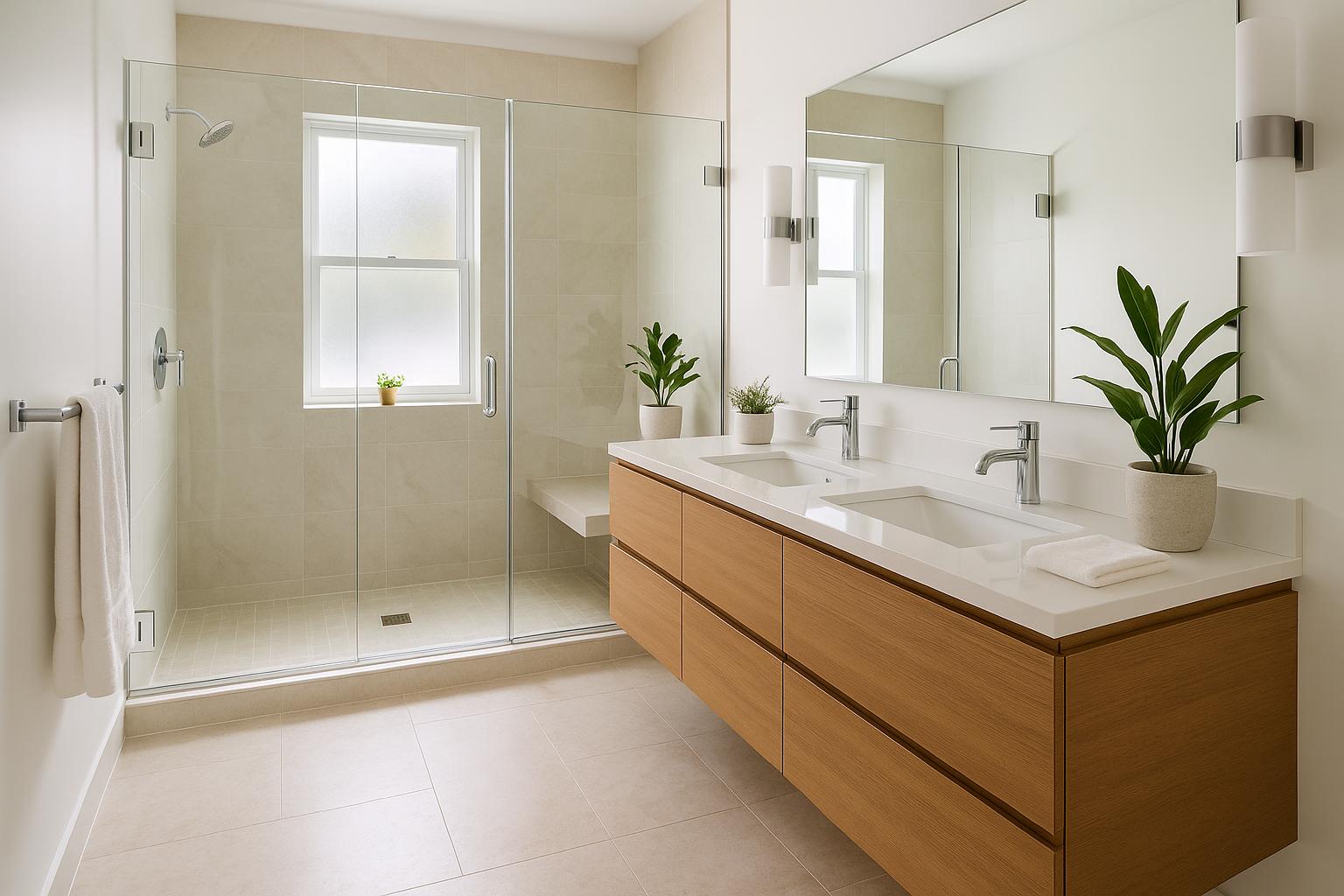
Why Your Bathroom Layout Matters More Than You Think
When most homeowners start thinking about a bathroom remodel, they jump straight to finishes — tile colors, vanity styles, fixture upgrades. Those details matter, but the layout underneath them is what determines whether your bathroom actually works every day.
A beautiful bathroom with a frustrating layout is still a frustrating bathroom. The door that bumps into the vanity. The shower that feels cramped even though the room isn't small. The toilet that's the first thing you see when the door opens. These are layout problems, and no amount of premium tile can fix them.
If you're planning a bathroom remodel in Delray Beach, getting the layout right is the single most important decision you'll make — and it's the one that's hardest to change later.
Start With How You Actually Use the Space
Before looking at layout templates or Pinterest boards, spend a few days paying attention to how you use your current bathroom. Ask yourself:
- Do two people get ready at the same time in the morning?
- Do you prefer showers, baths, or both?
- Is storage a constant struggle?
- Do you need accessibility features now or in the near future?
- Is this a primary bathroom, a guest bath, or a kids' bathroom?
Your answers shape everything. A primary bathroom shared by a couple has very different layout needs than a hall bathroom used mainly by guests. A family with young children needs a tub. A couple planning to age in place in their Delray Beach home needs a curbless shower and wider clearances.
Common Bathroom Layouts and When They Work Best
The Single-Wall Layout
All plumbing fixtures — toilet, vanity, and shower or tub — line up along one wall. This is the most compact and cost-effective layout because it minimizes plumbing runs. It works well in smaller bathrooms, powder rooms, and guest baths where space is tight. Many older homes in Delray Beach have this layout in secondary bathrooms, and it can be refreshed beautifully without moving any plumbing.
The Two-Wall (Galley) Layout
Fixtures are placed on two opposing walls, creating a corridor-style bathroom. This layout gives you more flexibility to separate wet and dry zones — for example, the vanity on one side and the shower on the other. It works well in narrow rectangular spaces and is a common upgrade for homeowners who want to add a double vanity without expanding the room's footprint.
The L-Shaped Layout
Fixtures are arranged along two adjacent walls, forming an L. This opens up floor space in the center of the room and often allows for a larger shower or a freestanding tub. It's a popular choice for primary bathroom remodels where homeowners want the room to feel more open and spa-like.
The Compartmentalized Layout
The toilet and sometimes the shower are enclosed in their own small sections within the bathroom. This layout is ideal for shared primary bathrooms where privacy matters. One person can use the toilet area while another is at the vanity. It requires more square footage, but if you have the space, it dramatically improves daily functionality.
Key Layout Principles That Apply to Every Bathroom
Regardless of which layout you choose, a few universal principles will help you avoid costly mistakes:
- Keep the toilet out of the direct sightline from the door. This is the most overlooked layout detail. When you open the bathroom door, the vanity or shower should be what you see first — not the toilet.
- Give the shower enough room. A 36-by-36-inch shower is the minimum for comfort, but 48 by 36 inches or larger makes a noticeable difference in daily use. If you're investing in a remodel, don't shortchange the shower to fit in a tub you'll never use.
- Plan for door clearances. The entry door, the shower door, and cabinet doors all need room to swing without hitting each other or the toilet. This sounds obvious, but it's one of the most common problems in poorly planned bathroom remodels.
- Prioritize ventilation. South Florida's humidity is relentless. Your layout should accommodate a properly sized exhaust fan, and if possible, position the shower near an exterior wall to make venting easier. Mold and moisture damage are real concerns in Delray Beach bathrooms that aren't ventilated well.
- Think about storage early. Recessed medicine cabinets, niches in the shower wall, and vanity drawers all need to be planned during the layout phase — not added as an afterthought.
When Moving Plumbing Makes Sense (and When It Doesn't)
One of the biggest cost factors in a bathroom remodel is whether you move the plumbing. Relocating a toilet, shower, or vanity to a different wall means opening up floors, rerouting drain lines, and potentially pulling additional permits.
Sometimes it's absolutely worth it. If your current layout wastes space, creates daily frustration, or prevents you from getting the bathroom you actually want, moving plumbing is a smart investment. The cost difference is typically a few thousand dollars — meaningful, but modest compared to the total project budget and the years of improved daily use you'll get in return.
Other times, a skilled remodeler can dramatically improve your bathroom without moving a single pipe. Upgrading fixtures in place, replacing a tub with a walk-in shower on the same drain, or swapping a pedestal sink for a full vanity can transform the room while keeping plumbing costs down.
A good remodeling contractor will walk you through both options honestly and help you understand the trade-offs. That's the kind of conversation we have with homeowners across Delray Beach, Boca Raton, and Boynton Beach every week.
South Florida Considerations for Bathroom Layouts
Remodeling a bathroom here isn't quite the same as remodeling one in a dry northern climate. A few regional factors should influence your layout decisions:
- Humidity management: As mentioned, ventilation planning is critical. Enclosed shower compartments need dedicated exhaust. Large open showers need splash control so moisture doesn't reach areas with wood cabinetry.
- Concrete slab foundations: Most homes in Delray Beach are built on concrete slabs, which means moving drain lines requires cutting into the slab. It's doable but adds cost and time. A layout that works with existing drain locations saves money.
- Aging in place: South Florida has a large population of homeowners who plan to stay in their homes long-term. If that's you, consider a layout that accommodates a curbless shower, grab bars, and wider doorways — even if you don't need them yet.
- Resale value: Buyers in the Delray Beach market expect updated bathrooms. A well-planned layout with a walk-in shower, double vanity, and good storage will consistently outperform a dated layout with premium finishes bolted on top.
Getting Your Layout Right Before Construction Starts
The best time to get your bathroom layout right is before a single tile is ordered or a single wall is opened. That means working with a remodeler who spends real time on the design and planning phase — measuring your space carefully, understanding how you live, and presenting layout options that balance your goals with your budget.
At Revival Home Remodeling, we don't rush past the layout conversation to get to demolition. We believe the planning phase is where the most important decisions happen, and we want every homeowner to feel confident about their layout before work begins.
If you're considering a bathroom remodel in Delray Beach or the surrounding communities, we'd love to talk through your space and help you find the layout that fits your life.